Grants
Regenerative Land Use
RegenSoil: Regenerative Soil Management for Water and Climate Resilience
Project duration: 09/2025 – 06/2027
Status: ON-GOING
The Challenge
Cyprus faces significant challenges related to water scarcity, holding the highest seasonal Water Exploitation Index (>40%) [1] among all EU Member States. Over the past 50 years, average rainfall has decreased by 50 mm [2], accompanied by unpredictable rainfall patterns and prolonged droughts due to climate change [3]. Unsustainable water consumption and inefficient water harvesting have resulted in over 60% of groundwater bodies being in a poor quantitative state [4]. Rural communities, reliant on dam reservoirs for water supply, are particularly vulnerable, underscoring the urgent need for water-saving agricultural practices.
Desertification is also a critical issue. The EU has highlighted the continuous degradation of Cypriot agricultural land [5], with around 40% of agricultural soils containing less than 1% organic compounds [6], while healthy soil should have over 3%. This degradation necessitates immediate action to combat desertification and restore soil fertility, which can be effectively achieved through the increase of soil organic matter via compost amendment. Furthermore, the lack of education about the unique agricultural benefits of compost application (i.e., soil regeneration, increased water retention capacity, etc.) as well as the potential of other regenerative agriculture techniques to mitigate climate change (such as mulching, no-till, cover cropping, and natural soil amendments) needs to be addressed.
Currently, Cyprus faces a significant gap in compost production, with only 2.2% of municipal solid waste composted in 2022 [7], yielding just 30,000 m³ of compost against an estimated annual need of approximately 6,096,200 m³. Green waste management practices are inadequate; agricultural green waste is often burned, while park and garden waste is improperly disposed of, increasing fire hazards. Additionally, transportation of green waste to urban compost facilities is economically unviable. The high market value of produced compost compared to chemical fertilizers further complicates the transition to sustainable green waste management [8].
The Solution
The project aims to support rural communities in Larnaca region to adopt regenerative soil management techniques that conserve water and mitigate climate change. It will establish a community-owned composting scheme designed under circular economy principles to transform agricultural, household, and community green waste, as well as manure, into high-quality compost.
By providing low-cost, high-quality compost and training, the project also aims to encourage Cypriot farmers to adopt regenerative practices that will improve soil health, increase water retention, reverse desertification, and strengthen agroecosystem stability.
Project’s deliverables
- Circular Composting Scheme: Design and implement a symbiotic composting scheme that efficiently processes local organic waste into compost, promoting sustainability at the community level, through a dedicated compost facility. The facility will be capable of processing 2,000 m³ of green waste and 400 m³ of manure annually into approximately 300 tons of compost, which will be applied across roughly 26 hectares of farmland to improve soil structure and fertility. As a result, compost-amended soils are expected to retain more than 10,000 m³ of rainwater annually, significantly reducing irrigation needs and enhancing climate resilience in semi-arid rural communities.
- Training and Capacity Building: Conduct educational activities for farmers in the targeted communities to promote participation in the composting unit and to teach the fundamentals of regenerative farming techniques that enhance water conservation and contribute to climate change mitigation. By 2027at least 50 farmers will be trained on compost use and regenerative techniques.
- Compost Performance Trials: These will include water retention tests measure the compost’s capacity to hold water and indicate its potential to reduce irrigation needs, growth trials to assess plant performance in compost-amended soils, and bioassay germination and biomass production tests to confirm the compost’s safety and effectiveness.
- Dissemination of project’s progress and achievements.
Project’s updates
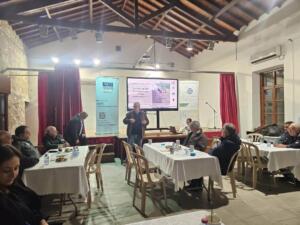
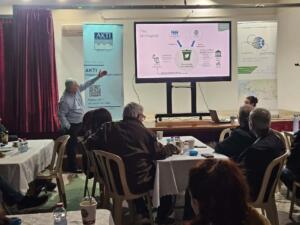
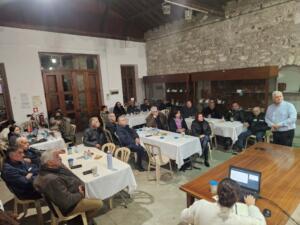
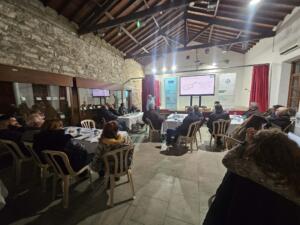
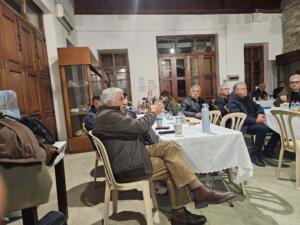
- Stakeholder Workshop ‘Creating a Local Pruning Management System for Compost Production’, Kalavasos, January 2026.
A bit about the Organizations
Cyprus Environment Foundation – The Leading Organization. The Cyprus Environment Foundation (CEF) is a non-profit organisation that aims to protect and enhance the natural beauty, biodiversity and ecosystems of our beloved Cyprus. CEF is part of the Conservation Collective, a global network of 20 organisations supporting local environmental projects. The way CEF operates is simple: Raising funds from individuals, foundations and companies and channelling that money in the form of grants to local organisations and initiatives to support environmental projects that have high importance and impact on the island.
AKTI Project and Research Centre – Partner Organization. AKTI is a well-established environmental NGO operating since 2000. From its inception, AKTI has been dedicated to conducting applied environmental research tailored to Cyprus’s unique context, scale, and challenges, delivering tangible, practical solutions to local environmental issues. Committed to building a knowledge-based society and empowering active, informed citizens, AKTI works closely with schools, universities, and local authorities through a variety of educational and community initiatives. One of AKTI’s main areas of work is advocating and raising awareness about effective waste management solutions through participatory processes. Organic waste management is one of its focus areas, and AKTI has promoted the Scheme since 2022 in rural areas of Cyprus. CEF support provided the seed funding for its early adoption, also securing further EC funding through Horizon projects Terrasafe, Nurish, and bi-communal activities.
ISOTECH Ltd Environmental Research and Consultancy – Partner organization. Since 1991, ISOTECH has evolved into one of the leading environmental companies in Cyprus. The firm has a dynamic involvement in environmental consulting and applied environmental research. Isotech brings to the project over 30 years of applied research in co-composting, scientific and technical know-how in developing tailored compost recipes based on local organic substrates, and in designing innovative, low-cost composting units to serve local communities and farmers. It applies its own designs for basic composting equipment and conducts feasibility studies to minimize costs, optimize compost production, and strengthen local engagement.
References
[1] https://www.eea.europa.eu/en/analysis/indicators/use-of-freshwater-resources-in-europe-1
[2] https://www.moa.gov.cy/moa/wdd/wdd.nsf/index_en/index_en?opendocument
[3] MedECC: Climate and Environmental Change in the Mediterranean Basin – Current Situation and Risks for the Future. First Mediterranean Assessment Report [Cramer, W., Guiot, J., Marini, K. (eds.)]. , Marseille, France (2020)
[5] https://www.eca.europa.eu/lists/ecadocuments/bp_desertification/bp_desertification_en.pdf
[7] https://www.pio.gov.cy/en/press-releases-article.html?id=39928#flat
[8] Market research performed by Isotech, based on market prices.